- work independently and drive product decisions with minimal guidance,
- bring structure to ambiguous early-stage problems,
- collaborate closely with engineering to align UX with technical constraints,
- and establish scalable design processes that support product growth.
Designing an AI-Powered Platform for Public Speaking Practice and Feedback
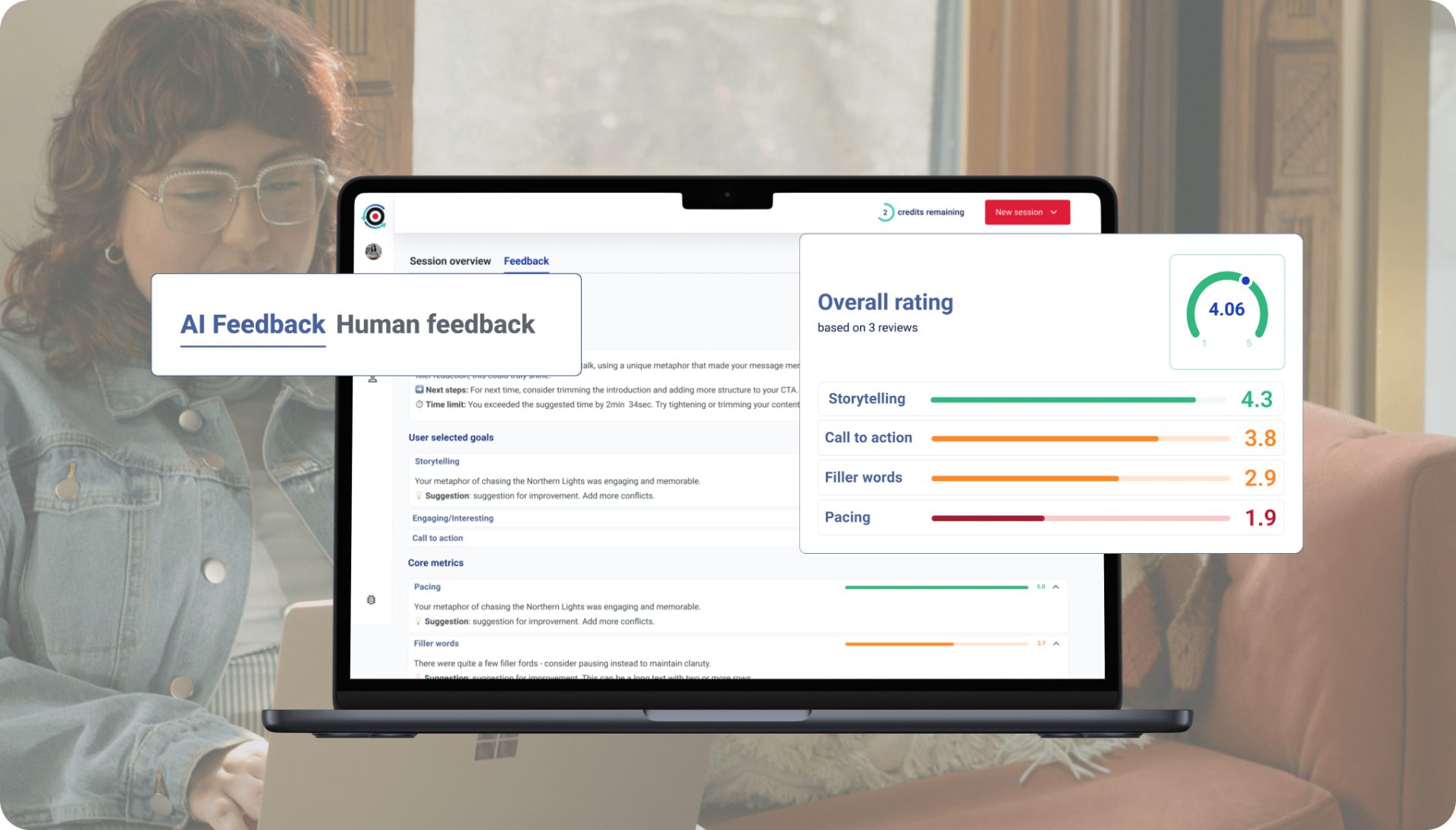
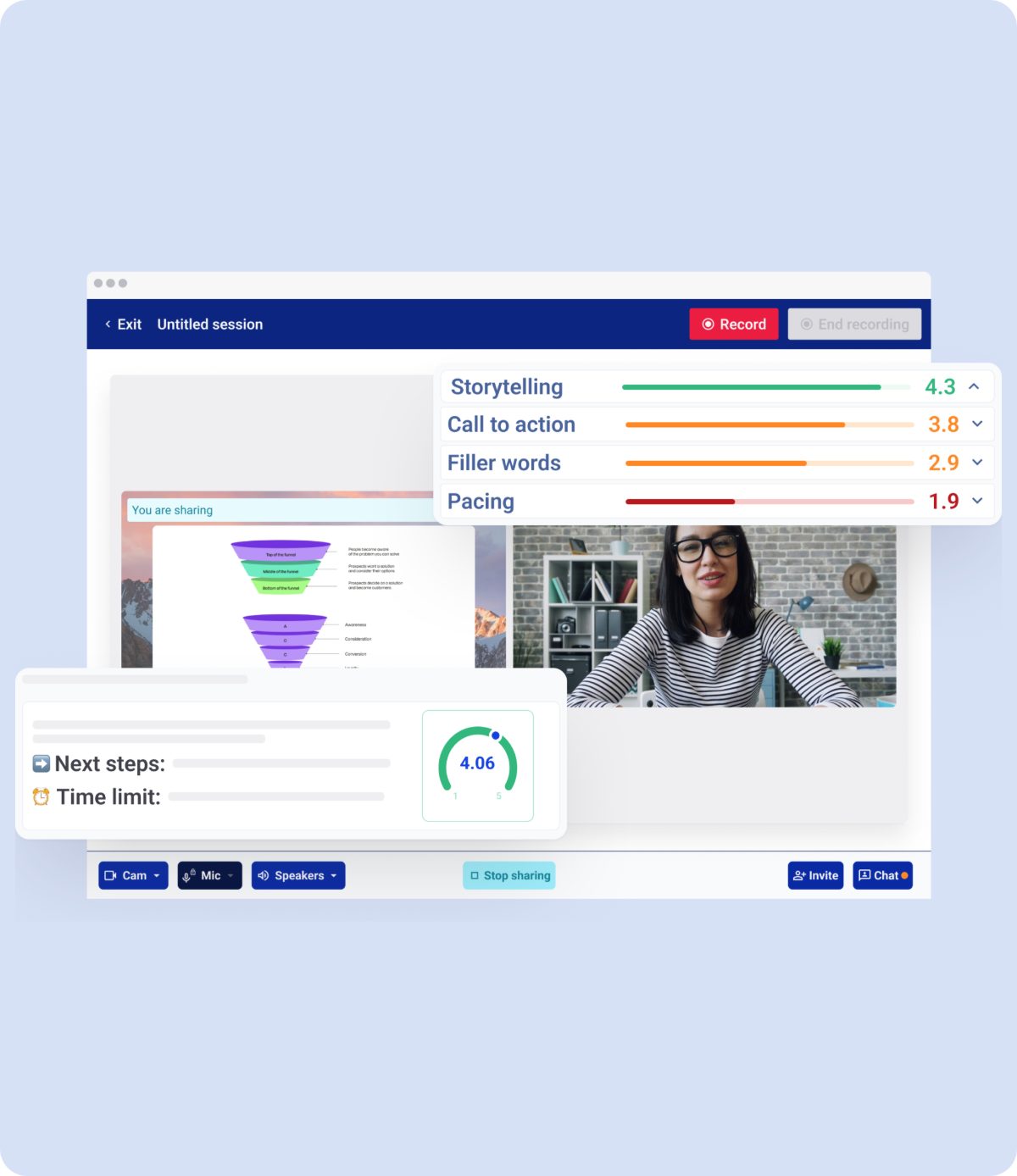
On-stage.ai is an early-stage startup building an AI-powered platform that helps people train and improve their public speaking skills.
The CEO and Founder reached out when the product was still just an idea in her head. She was looking for a design partner to help bring it to life. Together, we transformed an abstract concept into a practical platform and iterated toward a beta-ready experience.
Business Goal
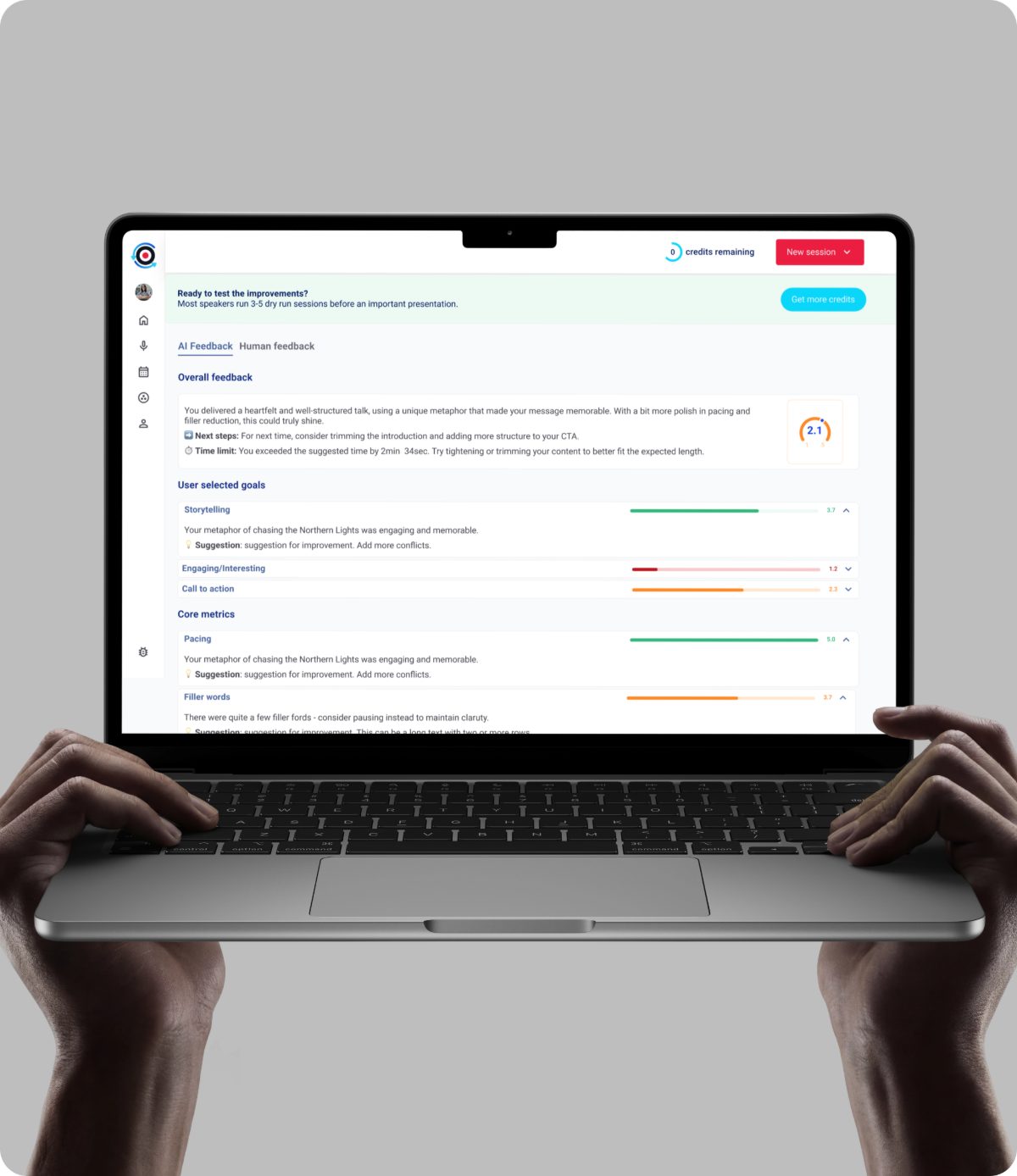
On-stage.ai’s primary goal was to build a robust AI-powered platform capable of recognizing speech and delivering in-depth, complex feedback.
User Impact Goal
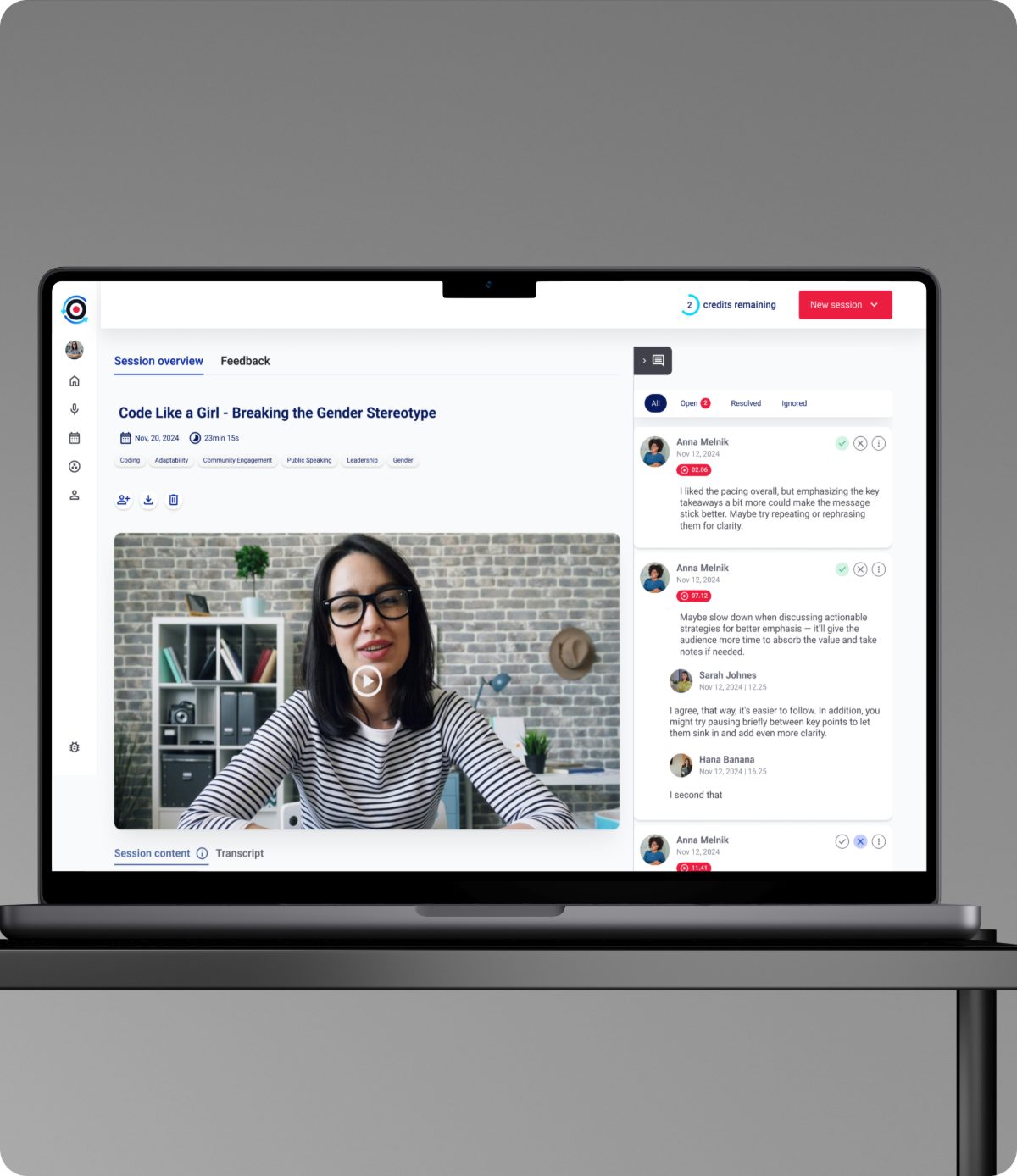
For users, the main impact goal was to improve their public speaking skills by instant practicing without feeling anxious about getting feedback - both AI and human.
Design Process
I took the role of a Founding Designer who took the product from idea to real working platform. Let’s walk through it:
01
Defining product value and North star
At the earliest stage the CEO and I worked closely to shape the foundation of On-stage.ai. Before any screens were designed, we clarified what the platform should truly stand for. Together, we mapped out the key user roles within the ecosystem (individual speakers, company managers, and potential enterprise clients) and defined the core services the platform could offer to each of them. We explored different value scenarios - from AI-driven speech analysis and performance tracking to manager dashboards and team-level insights. This strategic work helped us articulate the product’s core value proposition, align on long-term positioning, and define our North Star metrics and supporting KPIs.
02
Creating User Flows & Information Architecture
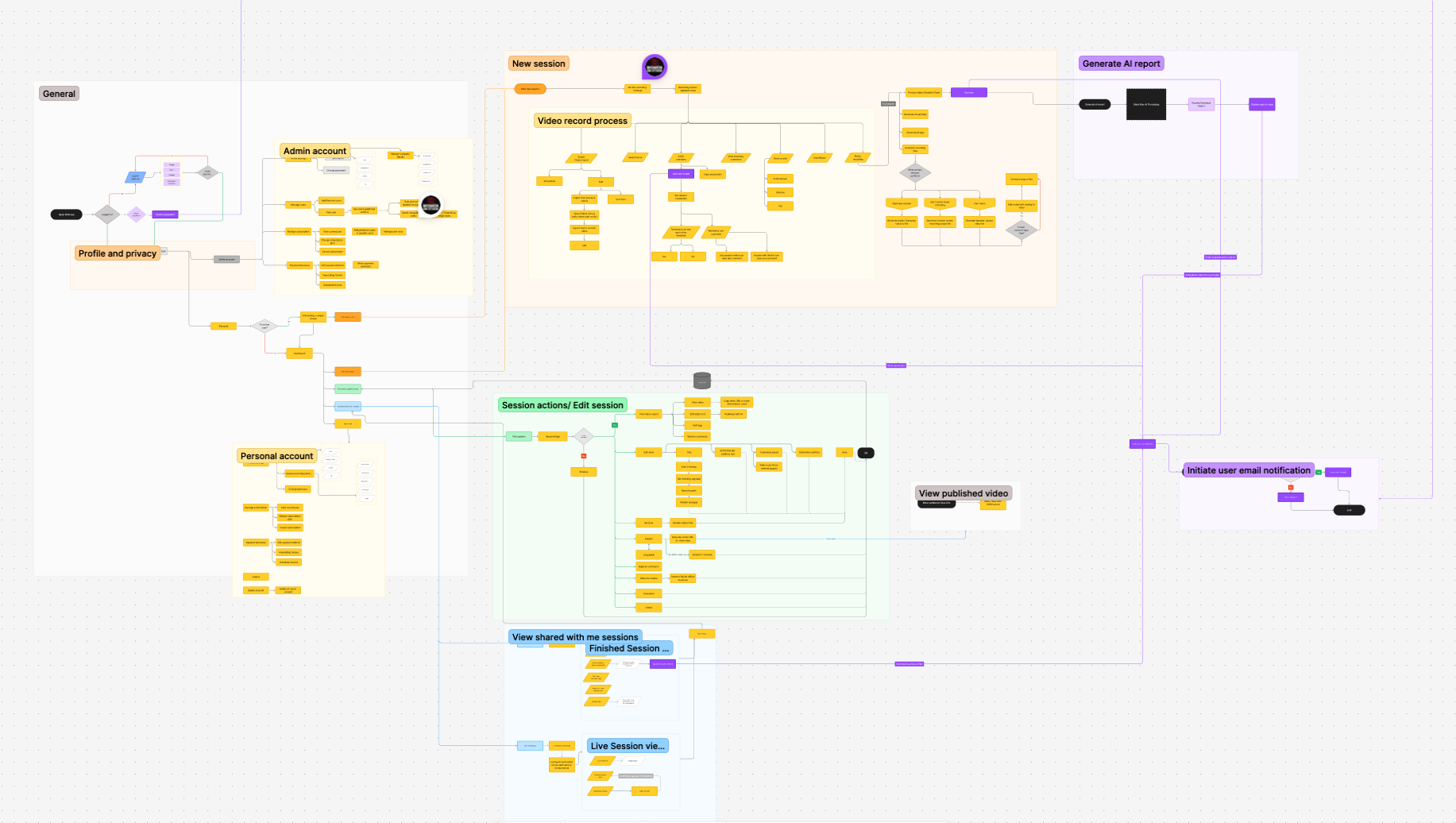
Based on the defined product value and roles, I designed the complete end-to-end user flows, covering all key personas and their interactions within the platform.
Beyond surface-level journeys, I mapped client-server dependencies to clearly outline how user actions would trigger AI processing, data storage, feedback generation, and manager reporting logic. This gave us a clear understanding of the process and dependencies and start out server development.
03
Wireframing & Cross-Functional Alignment
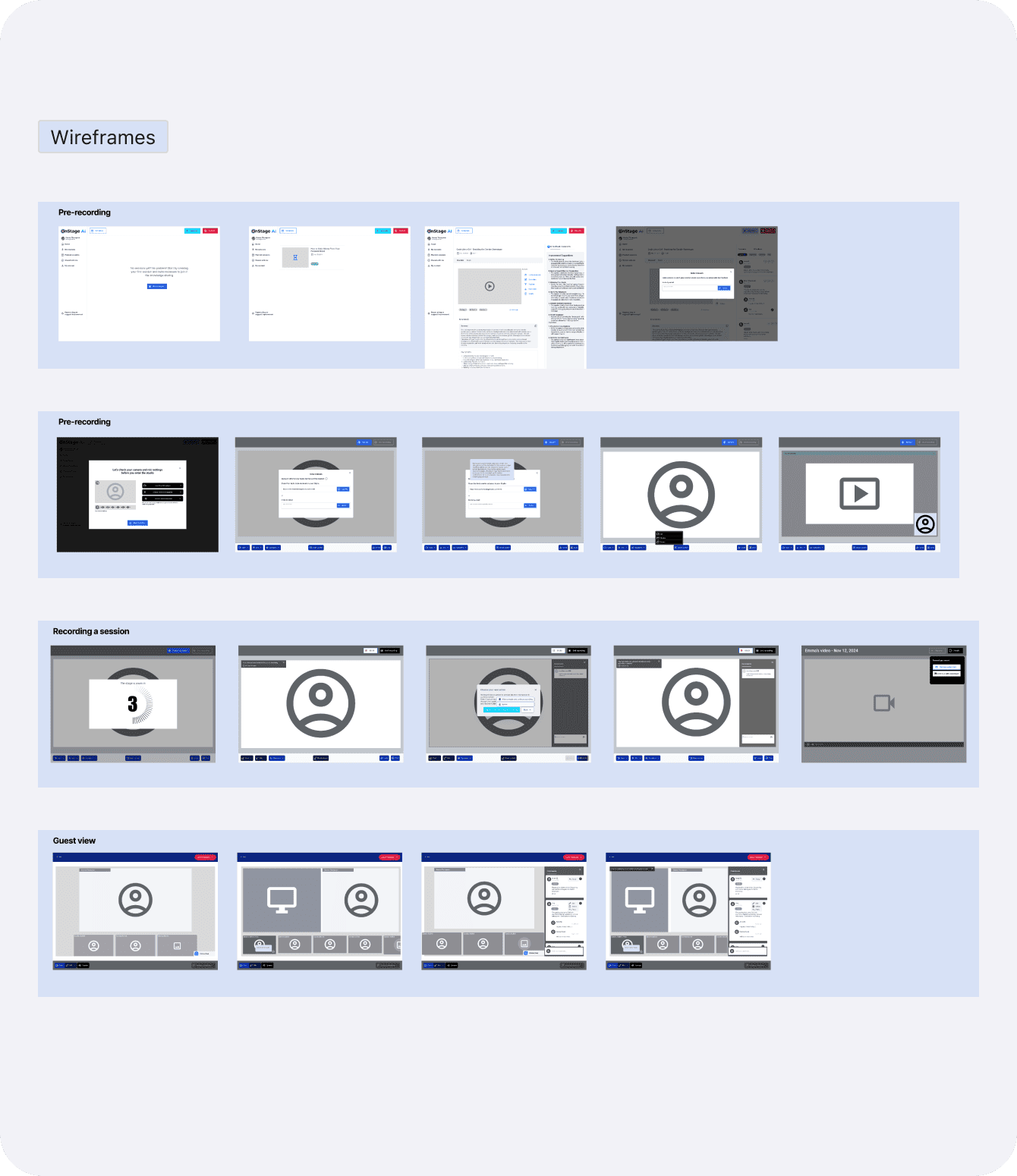
Step-by-step, I covered all the features with prototyped wireframes. Every week, after them been coordinated and approved with the Founder, I synced with dev team where I presented solutions, and, if was needed, adjusted design according to technical restrictions. This helped me being synced and clear in our expectations on feature development.
04
Product Planning, Roadmapping & User Testing
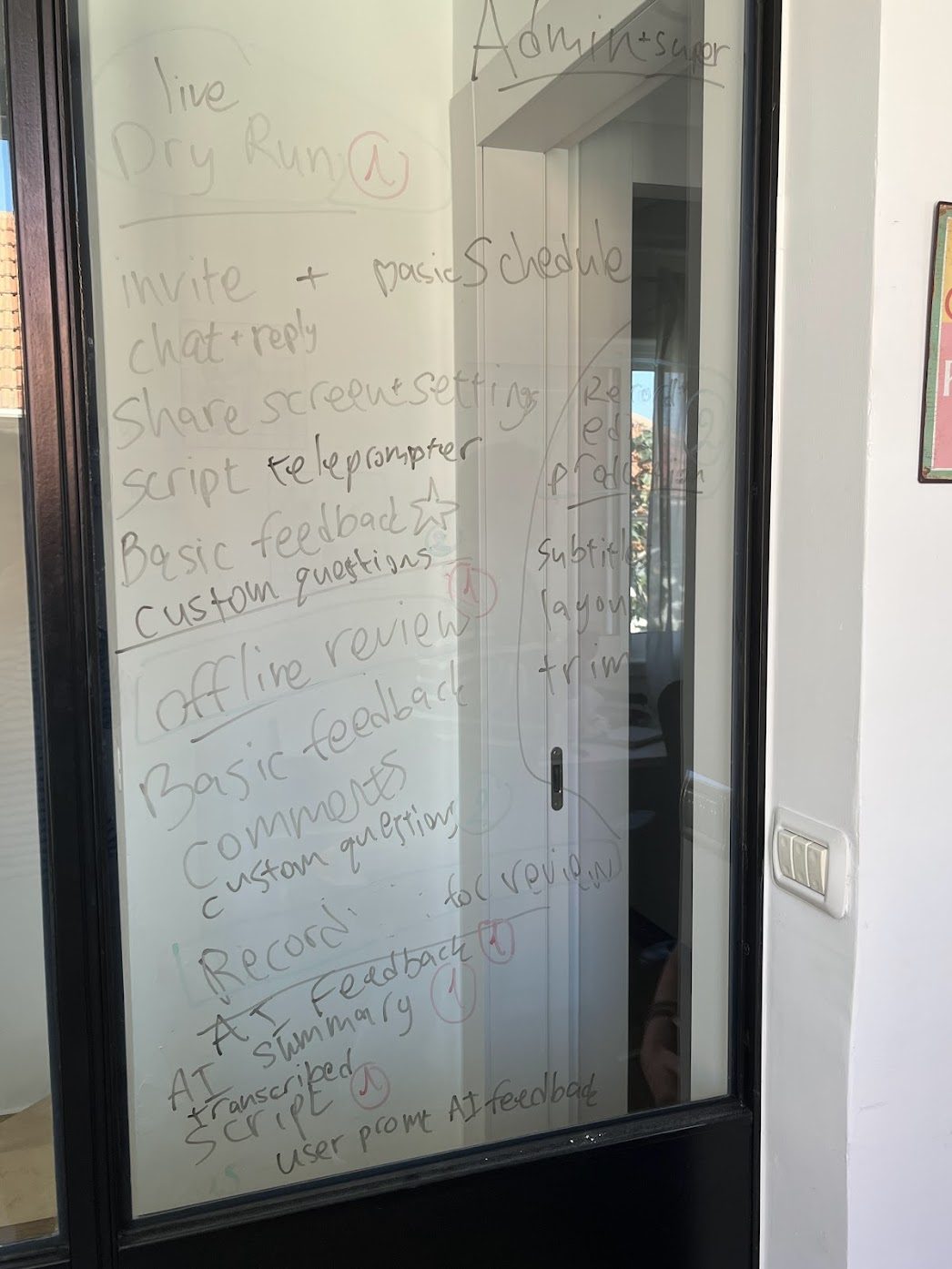
We ran a focused product strategy session with the CEO, and a startup consultant. At this session we reassessed our goals and made a prioritization decision: to focus the MVP on core practice and AI-driven feedback, while intentionally cutting secondary features such as advanced video editing & recording tools, and YouTube publishing. This helped us avoid feature dilution and stay aligned with our core value proposition.
In parallel, I conducted several user testing sessions to validate usability and overall experience. The results confirmed that the core flows were clear and intuitive, and no structural design changes were required at that stage. Based on these insights, we defined the MVP feature set and created a structured product roadmap. After aligning scope and technical feasibility with the development team, I moved into the UI design phase.
This process gave us a sharper vision, a realistic execution plan, and strong alignment around how we would achieve the product’s primary goals.
05
UI Design & Design System
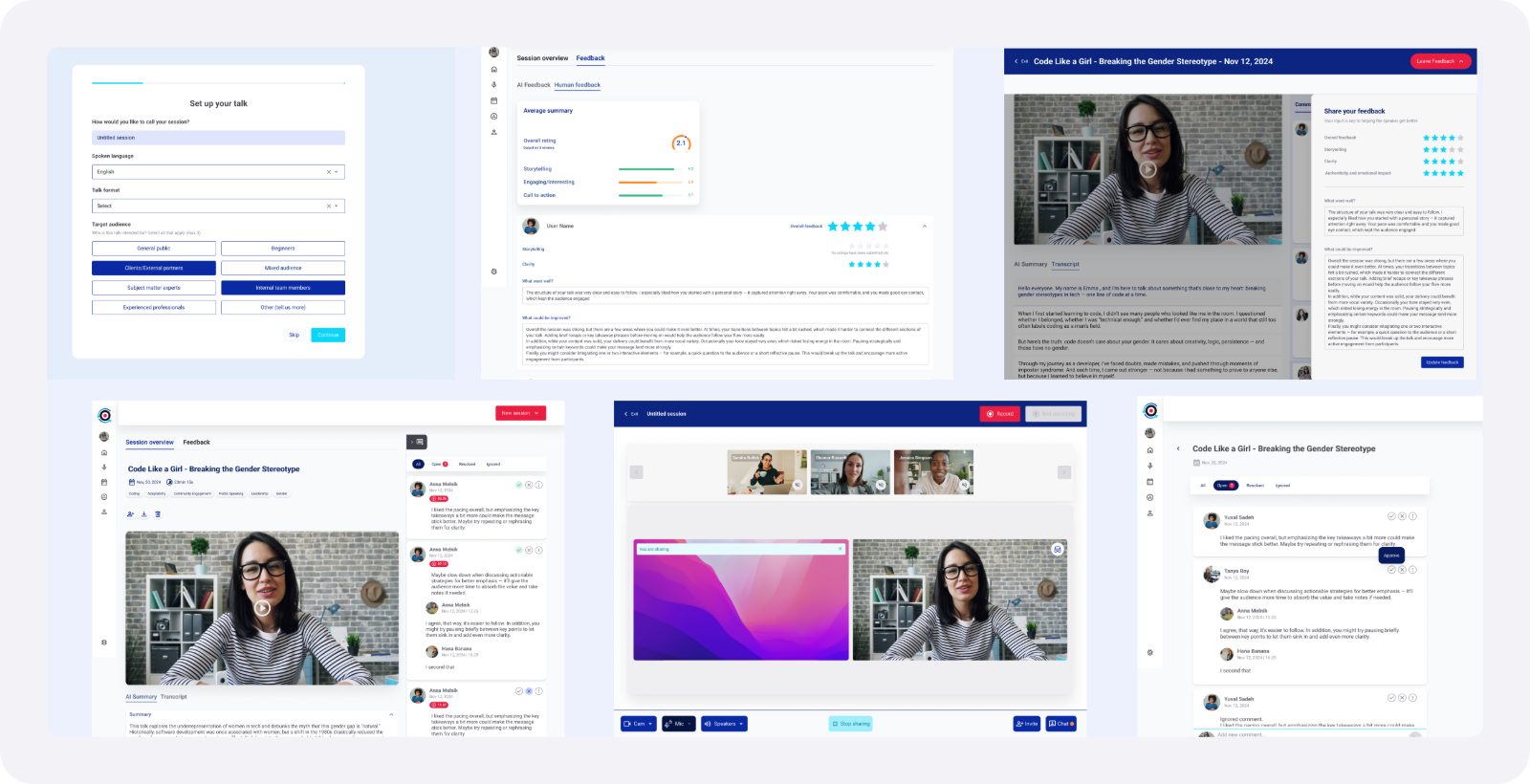
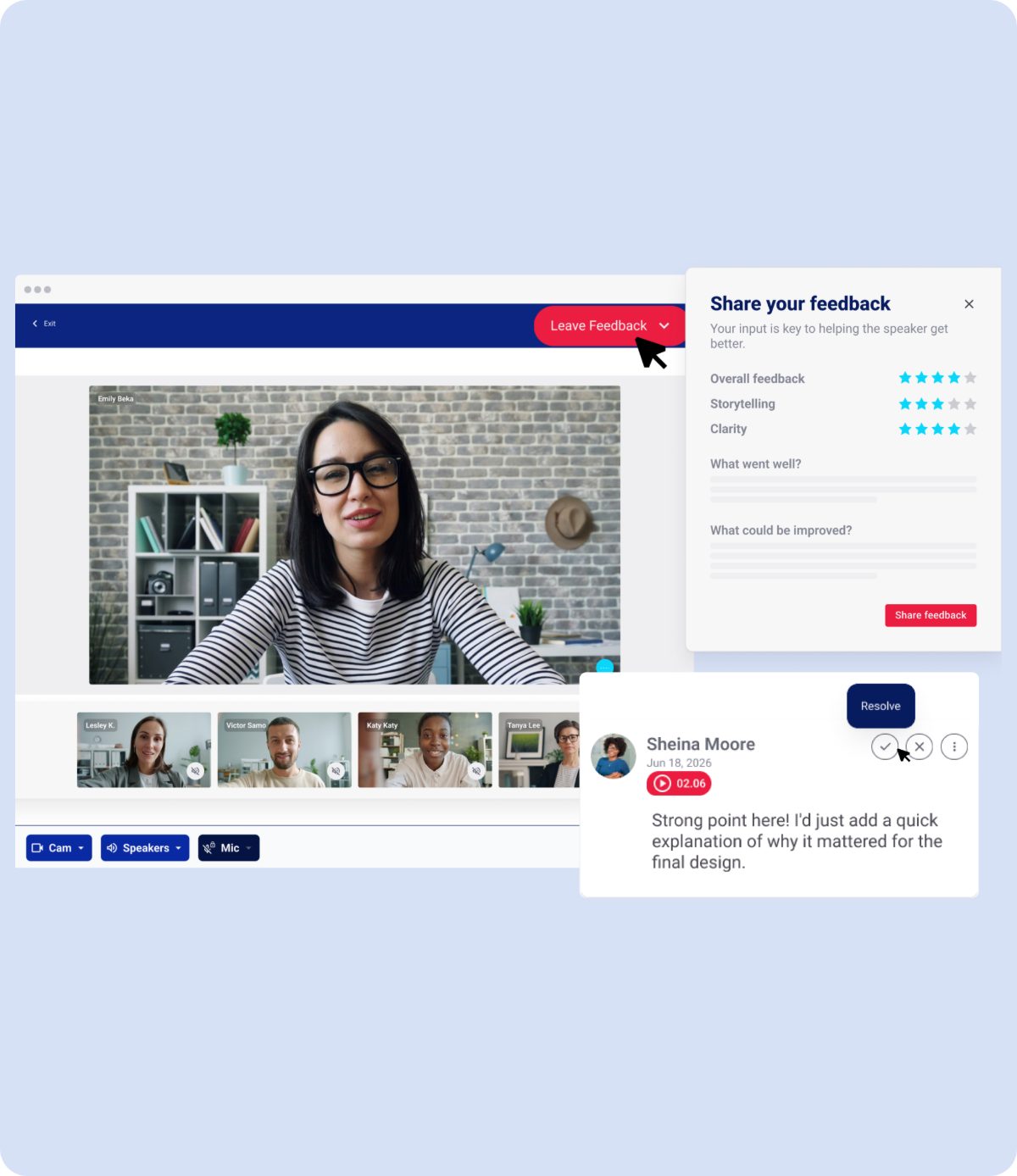
With direction clear and mapped, I moved into the UI design phase. I established the visual foundation of the product by creating a color palette, design tokens, and a scalable design system.
I also built a library of reusable components to support consistency across the platform and enable faster iteration as new features were developed. This systemized approach ensured visual coherence, simplified collaboration with developers, and significantly accelerated the design and implementation process as the product evolved.
06
Development and Growth
To build the designs, I worked (and currently work) closely with the developers team to help ensure integration of AI features met experience requirements.

07
Current Status & Next Steps
We are currently in the final pre-beta stage, focusing on resolving remaining bugs and polishing the experience before opening the platform to early users.
We already have a small focus group interested in testing the product. I will be leading the upcoming user testing sessions to observe how people interact with the platform in real scenarios, identify weak points in the experience, and prioritize improvements.
The insights from these sessions will guide the next iteration cycle and help us refine the product before a broader release.
08
Takeaways
Working as a founding product designer in an early-stage startup means balancing a high level of ownership with the realities of limited time, budget, and technical resources. In a small team, design decisions directly influence product direction, development priorities, and speed to market.
This environment required constant prioritization - often choosing functional clarity and product learning over visual polish in the early stages.
Through this experience, I strengthened my ability to:
Ultimately, this role positioned me not just as a Product designer, but as a product partner contributing to strategy, decision-making, and the foundation of the product experience.