Noviopus Onboarding: Product-Ready Wireframes Design
I joined the Noviopus team as a UX Designer with minimal onboarding - given a brief and left to figure out the rest independently. Noviopus is an AI-powered job matching platform. I conducted a user survey, worked with existing research materials, and used those insights to structure the onboarding flow - delivering information architecture and developer-ready wireframes.
Business Goal
Reduce complexity in the product specification onboarding flow, and accelerate product development by visualising key user journeys.
User Impact Goal
Help first-time users understand the platform faster and complete onboarding with minimal confusion.
Process
Conducting survey
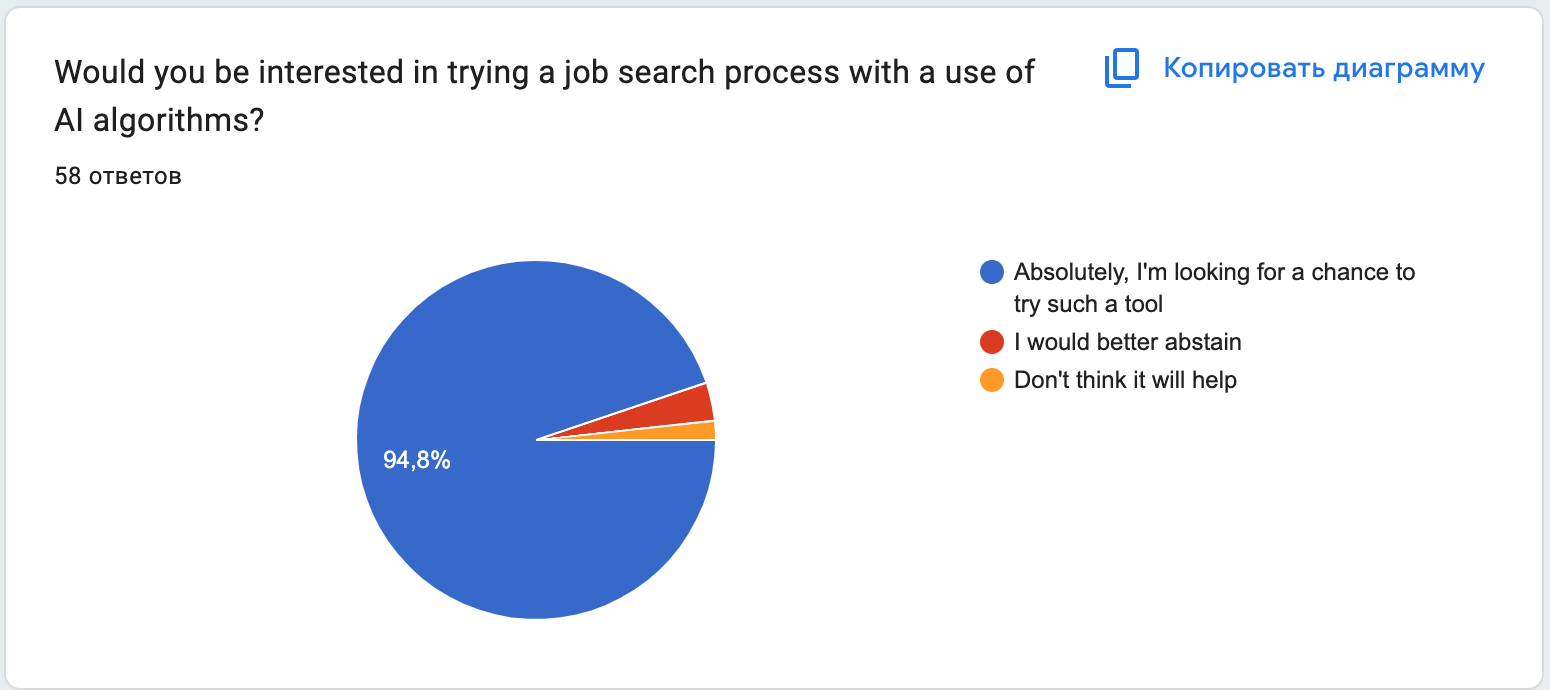
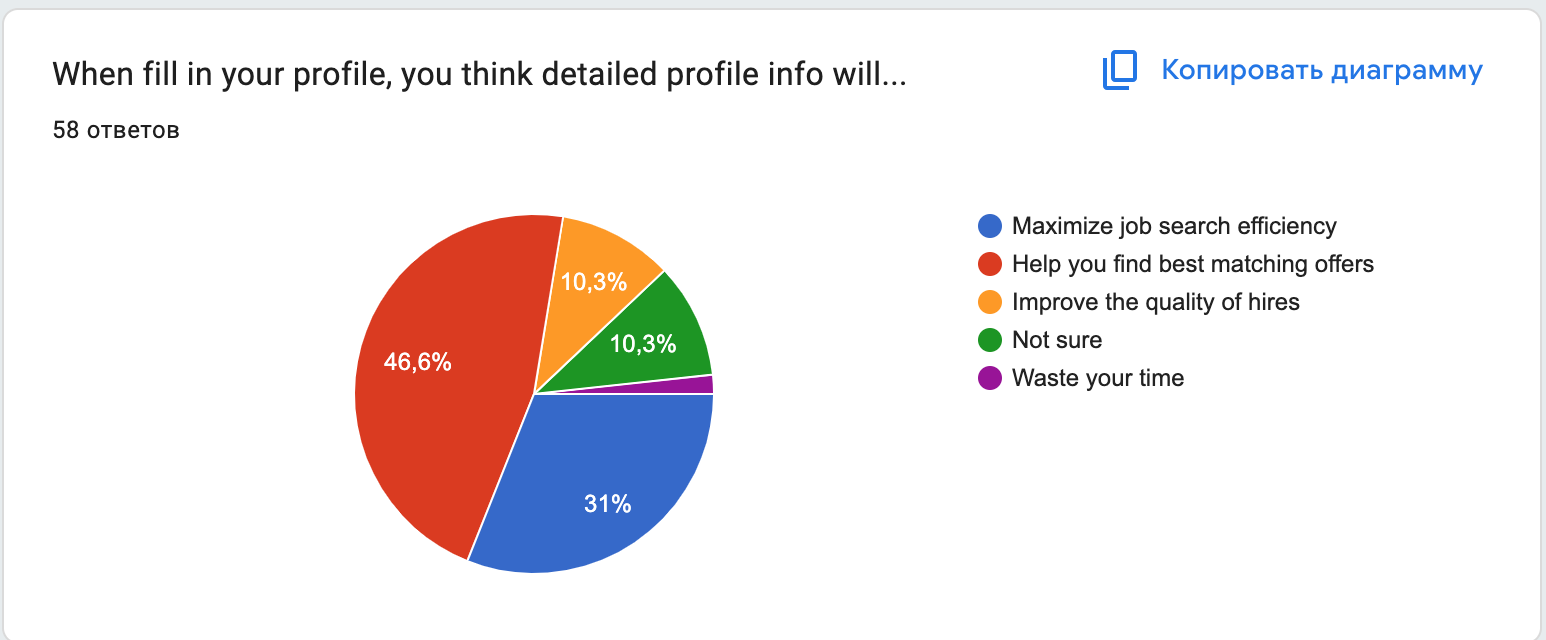
I started by reaching out to a local blogger whose audience focuses on job searching and career growth, and asked her to share my survey with her community. In total, 58 people responded, revealing a clear pattern:
People felt emotionally exhausted by the job search process. At the same time, they trusted AI and were willing to invest time if they understood the value behind it. Key insight: the goal wasn’t to shorten the onboarding flow, but to make users feel guided and motivated to complete it.
Analyzing CJM
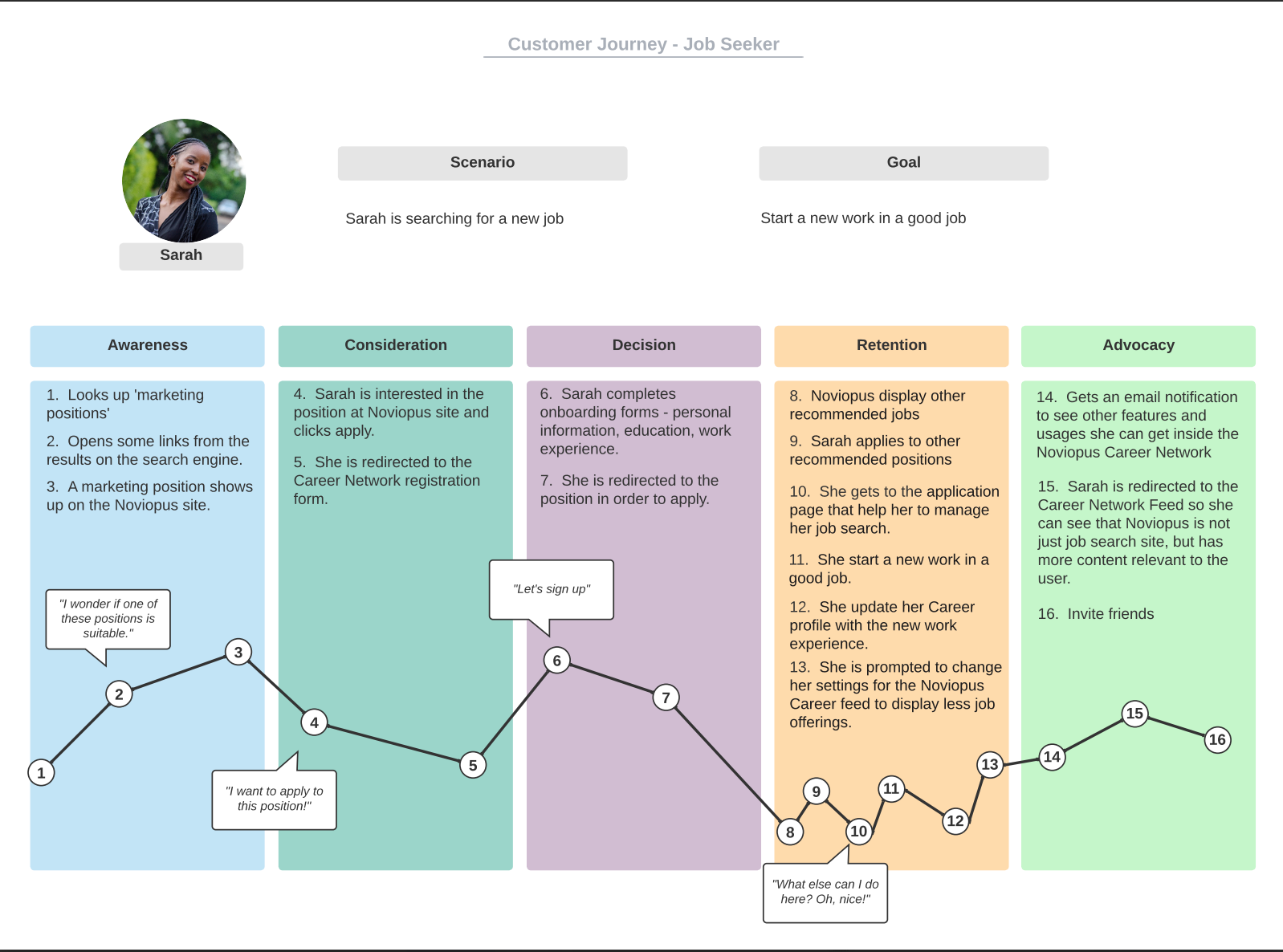
The CJM for the Job Seeker persona revealed a critical friction point: emotional engagement drops sharply at the Decision stage — exactly when users encounter onboarding forms.
While analyzing the journey further, it became clear that users who managed to complete this step transitioned into a positive retention loop, where they began discovering jobs, managing applications, and building their profile. Overall, the CJM highlighted that the onboarding wasn’t necessarily too long — it simply didn’t feel finishable.
Creating User Flows & Information Architecture
I then created a data visualization of the flow, breaking it down into logical sections. This helped structure the onboarding more systematically and made key dependencies between steps more visible.
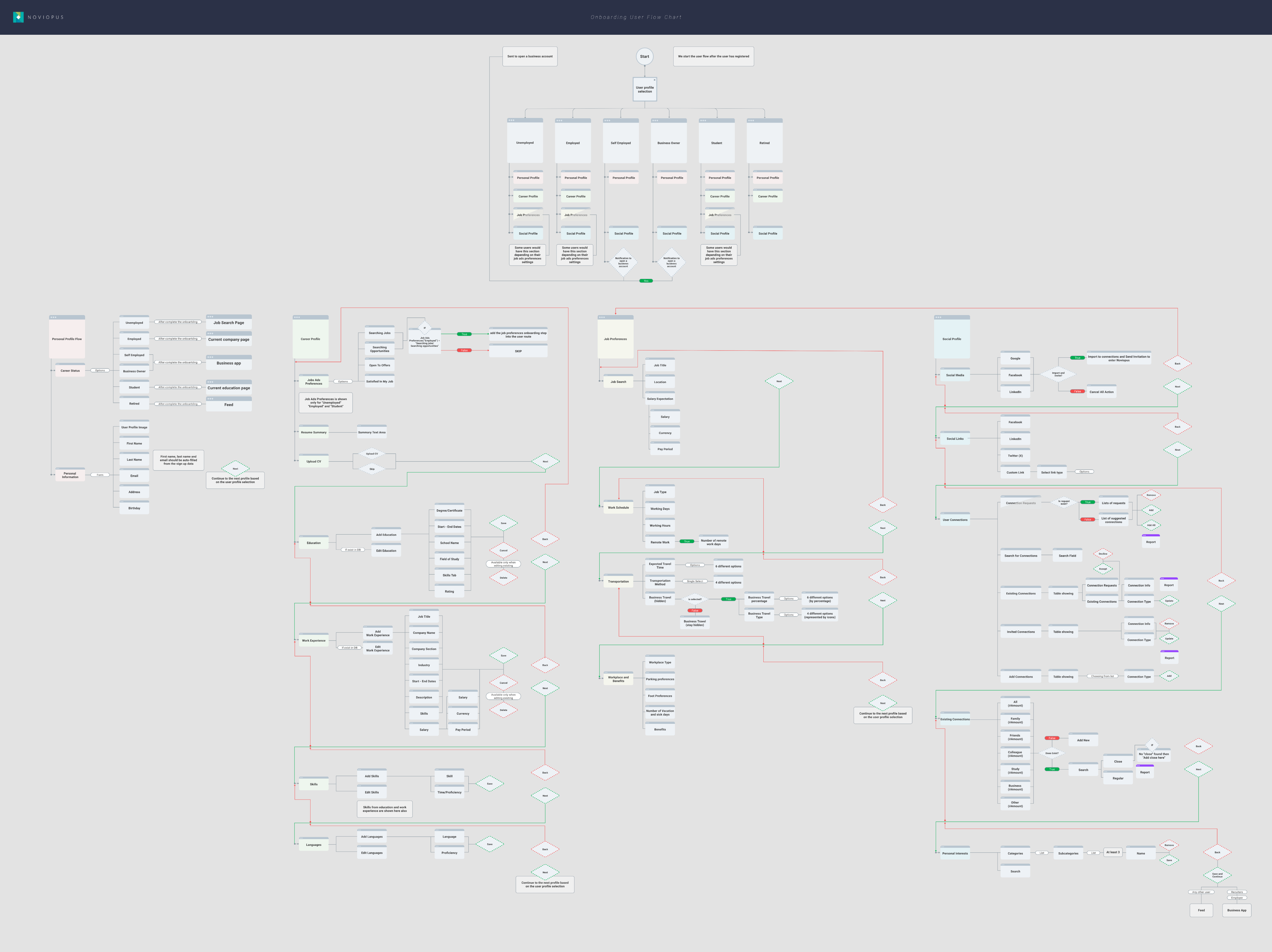
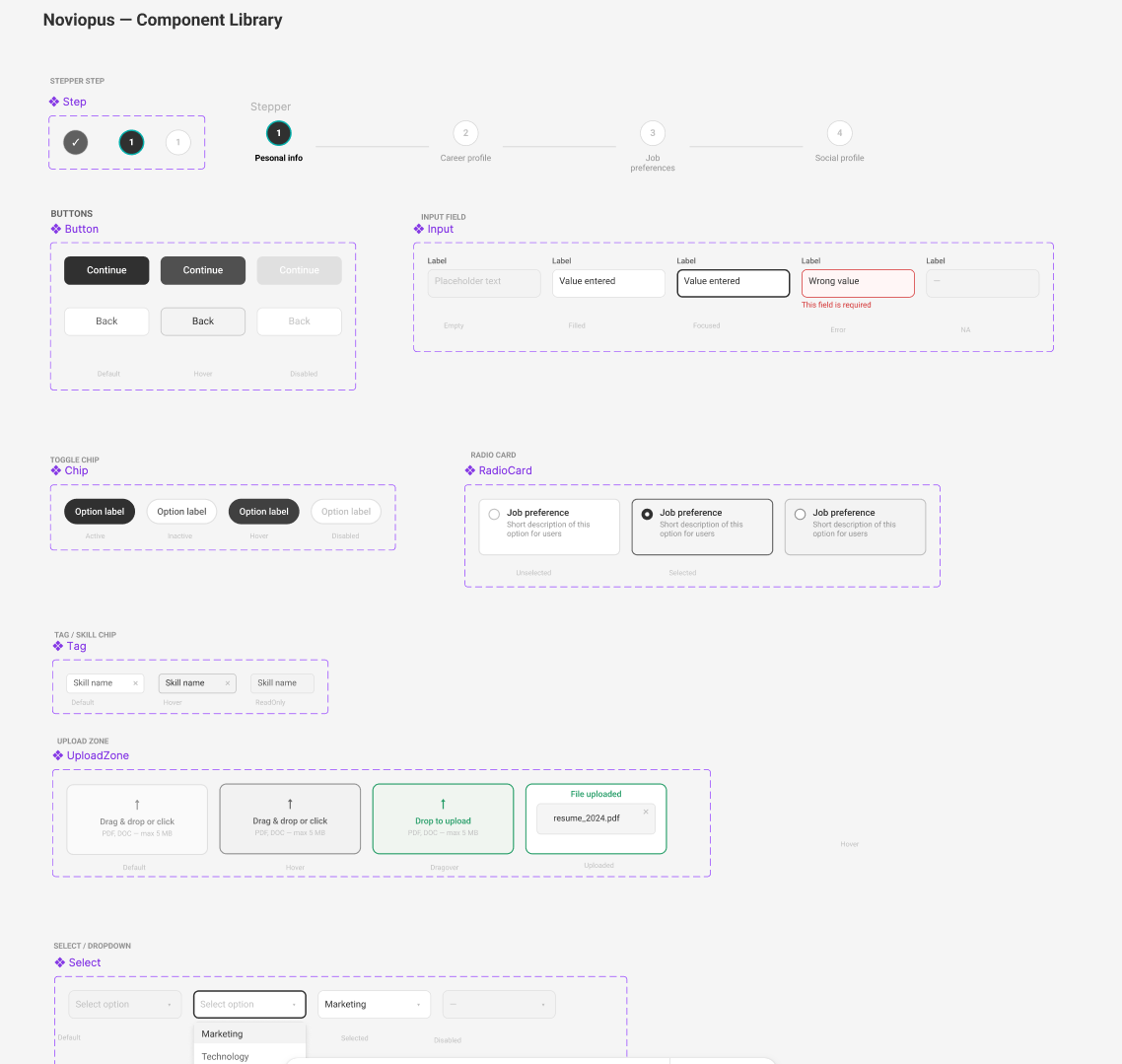
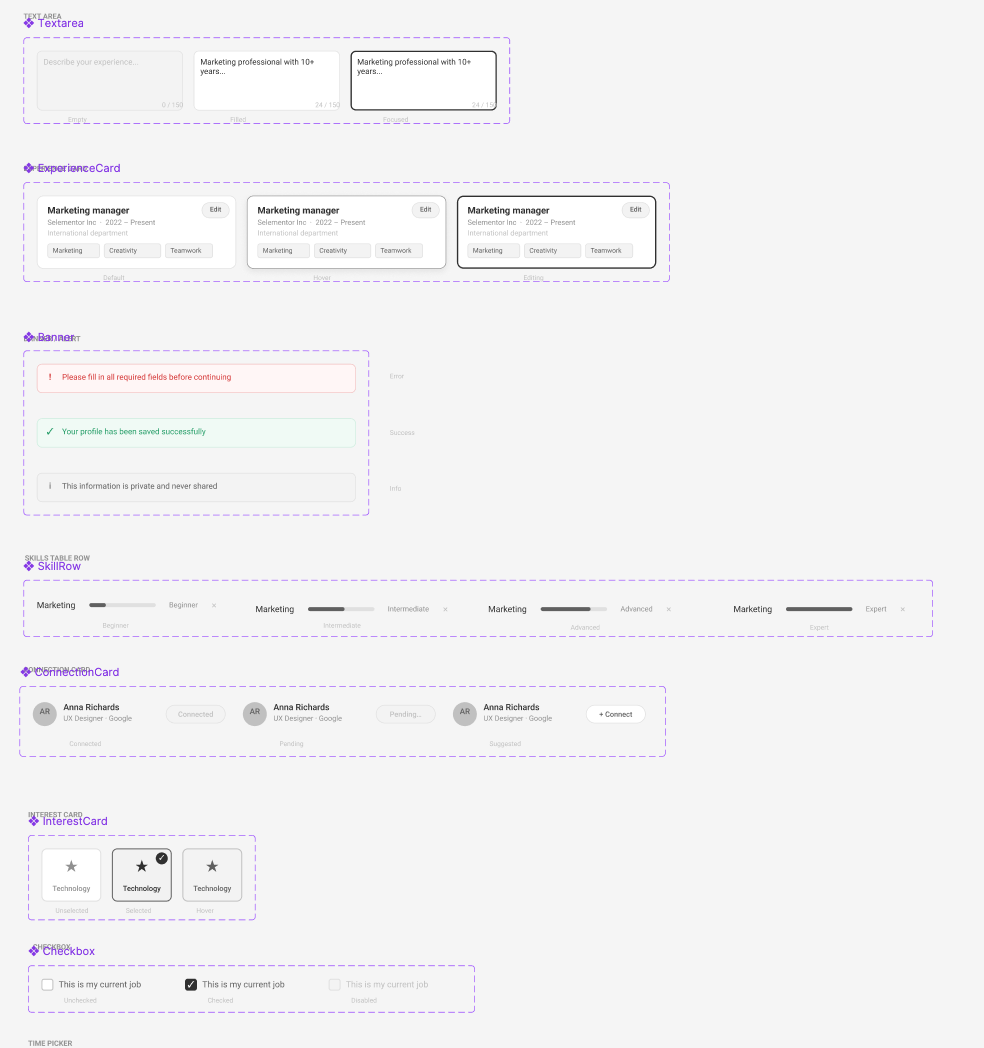
Once I had all the information structured and organized, I started by creating a component library. This gave me a set of reusable building blocks that could later be shared with both the development and UI teams.
When creating components, I follow an atomic design approach, ensuring that each component is reusable, easy to maintain, and scalable as the product evolves.
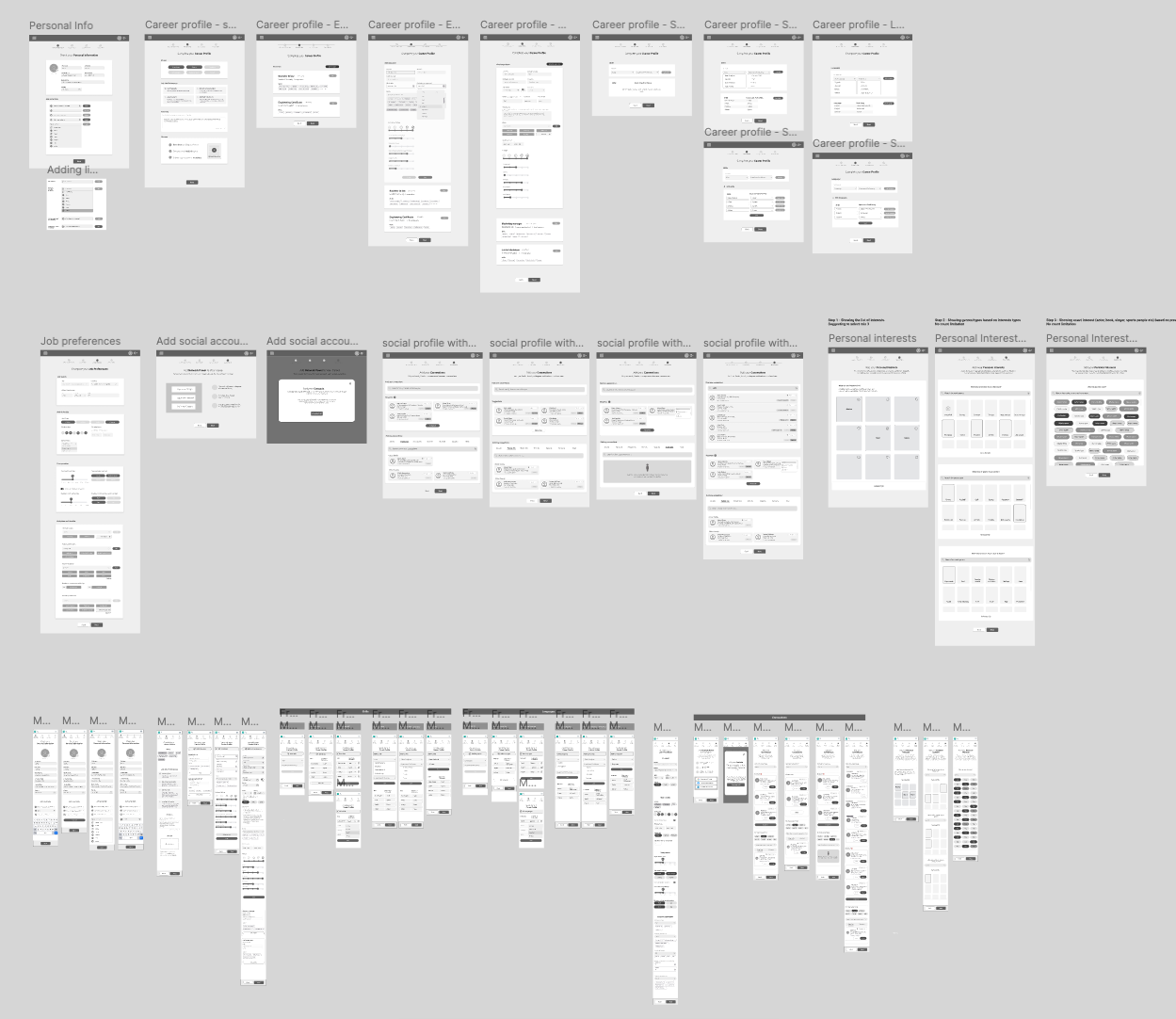
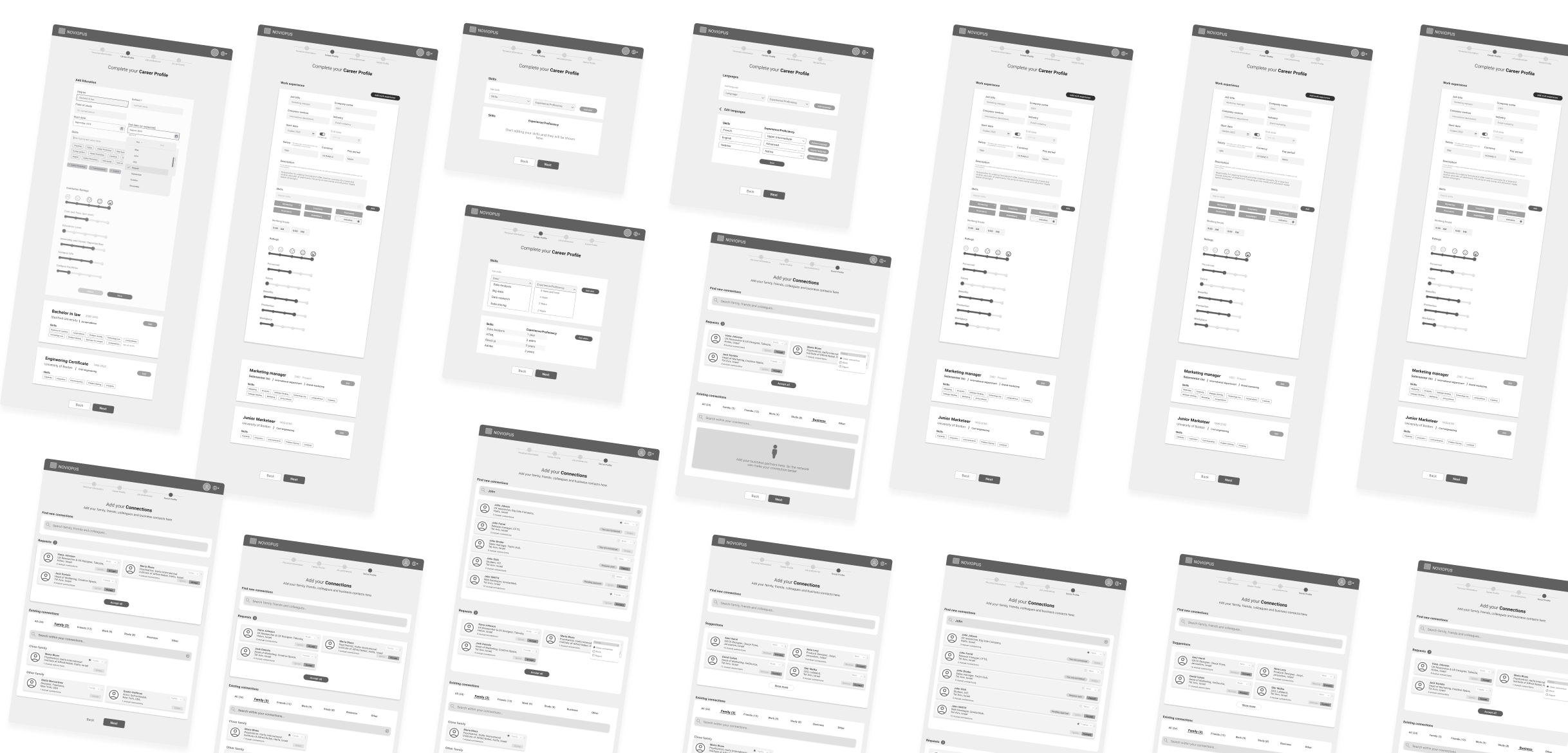
The result was a complete set of onboarding wireframes for both desktop and mobile.
What started as roughly 150 pages of specifications became a clear, structured onboarding experience. By organizing the information and constantly looking at it through the user’s perspective, I was able to turn complex requirements into logical screens built around meaningful content blocks rather than documents.
What started as roughly 150 pages of specifications became a clear, structured onboarding experience. By organizing the information and constantly looking at it through the user’s perspective, I was able to turn complex requirements into logical screens built around meaningful content blocks rather than documents.
The wireframes were accepted, handed off to the UI team, and development has since begun. The live product is available at noviopus.com.